Qigong, Tai Chi & Bagua classes
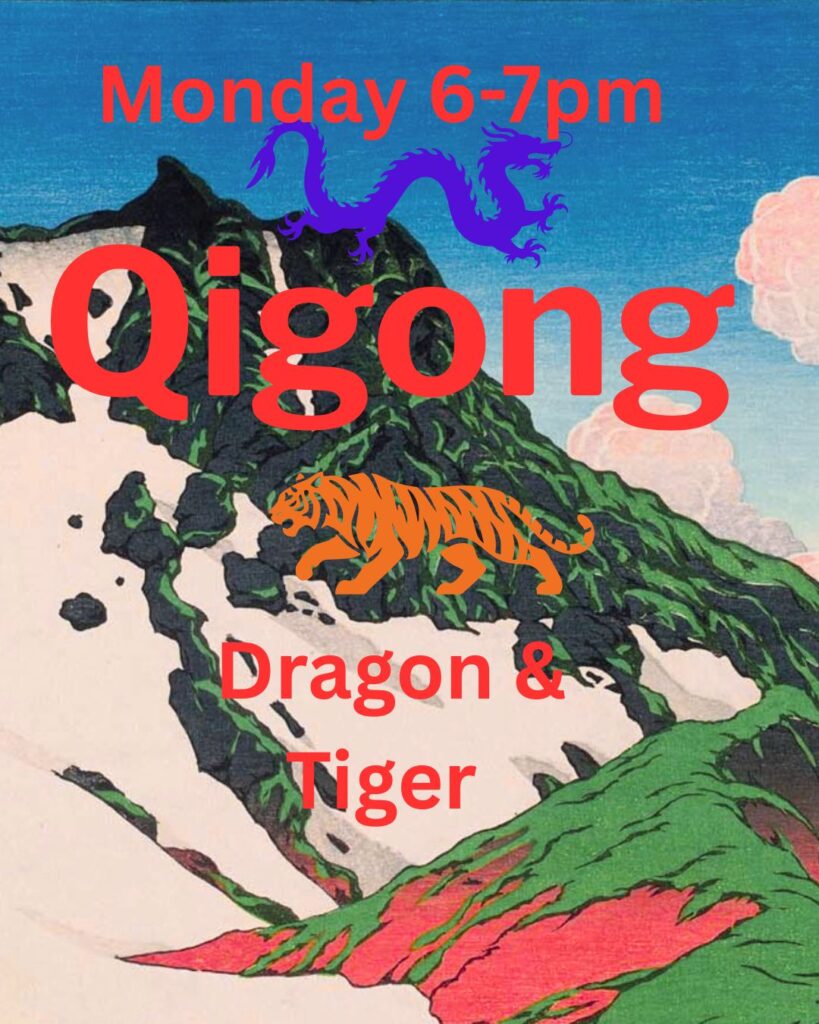
Cornerstone Community Centre BN3 2FL
Dragon & Tiger Qigong
Dragon and Tiger Qigong is an easy, enjoyable movement practice designed to help you relax, loosen the body and feel more energised. It’s fun to learn and suitable for complete beginners.
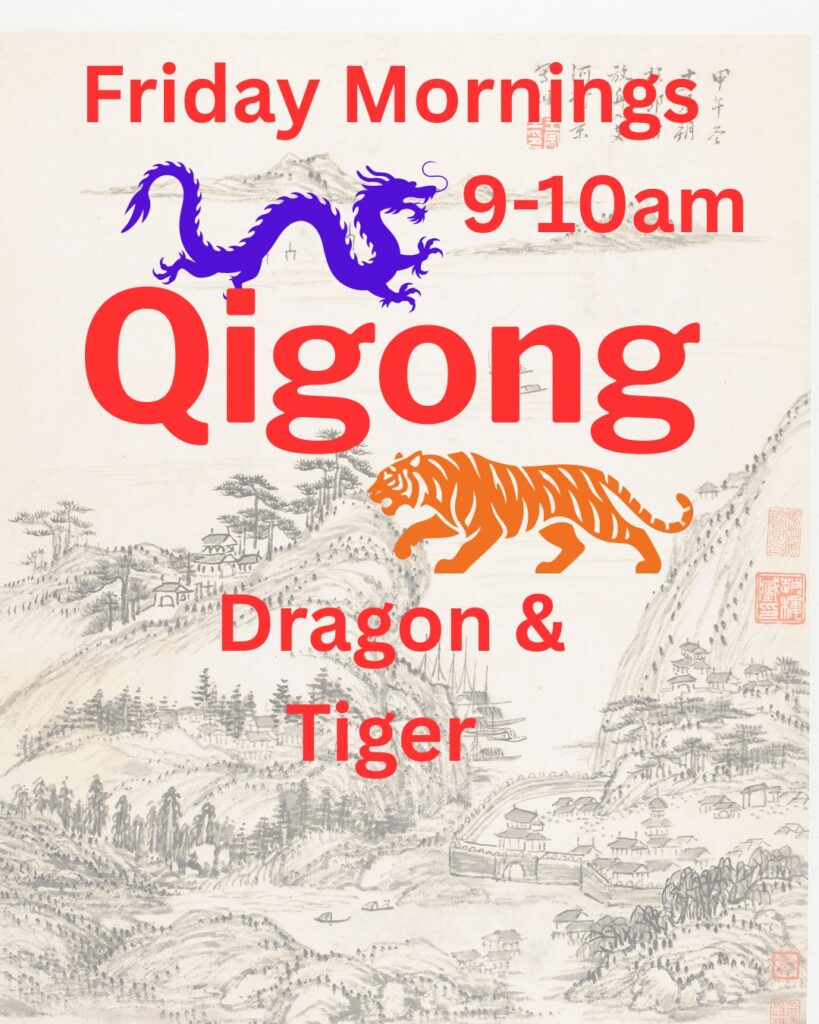
LIVE CLASS
8, 3rd Ave Hove BN3 2PX
Dragon & Tiger Qigong
Dragon and Tiger Qigong is an easy, enjoyable movement practice designed to help you relax, loosen the body and feel more energised. It’s fun to learn and suitable for complete beginners.
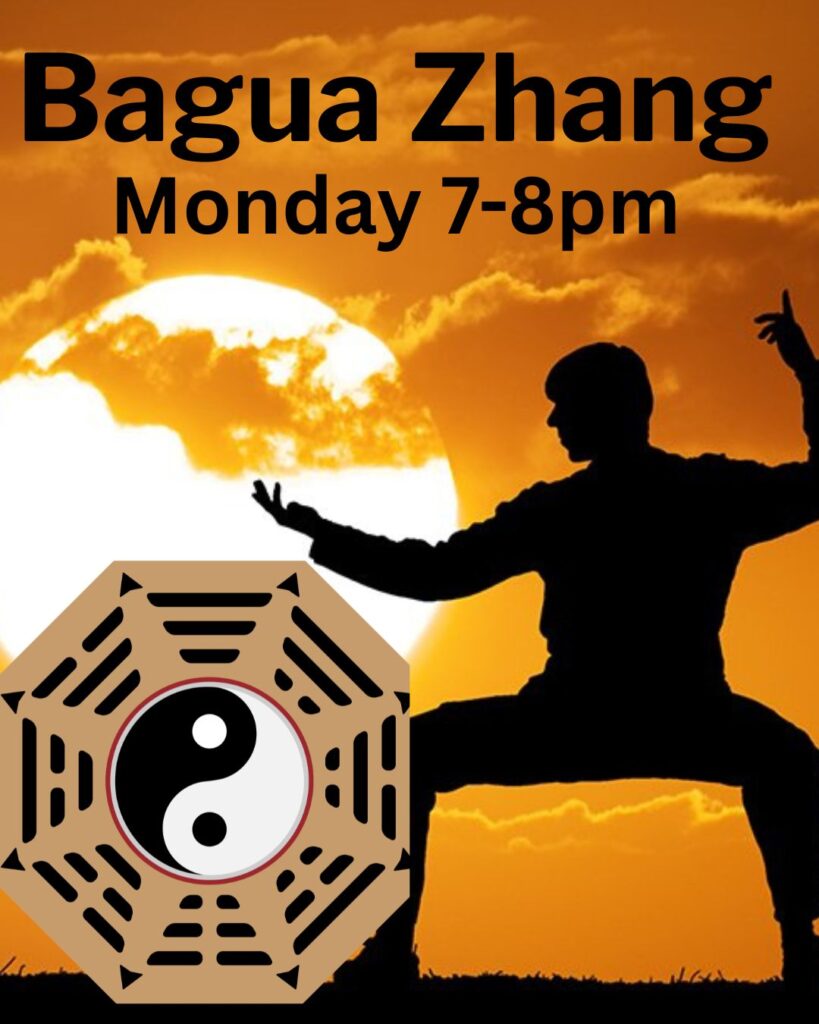
Internal Martial Art &
Meditation
Bagua Zhang is a dynamic internal martial art combining circular walking, flowing movements and mindful practice. Fun, energising and suitable for beginners.
Online Classes Start Oct 2026
Hun Yuan Qigong
Hun Yuan Qigong
Discover the unique body mechanics of Hun Yuan Qigong through simple, flowing movements that are enjoyable to practise, easy to learn and naturally deepen over time. Join the online classes from home and progress at your own pace.
Make Qigong part of your week
All levels are welcome, from complete beginners to experienced practitioners.
Drop-in classes are usually £12. Explore membership for regular practice and online resources.
September start 2026
Meet in the park at 9am to learn and practise this flowing Tai Chi form. Develop balance, body awareness and the fluid, spiralling movement of the “dragon spine.”
Classes Open to all Levels
Simple practices for health, balance, and new skills.
No previous experience is required.
Use the booking links to book your place or get in touch if you have any questions. 07496376554
See all public classes
for booking
Explore the practices
Hun Yuan Qigong
I trained in Hun Yuan Tai Ji and Qigong under lineage holder Master Chris Ray Chappell, completing teacher training in 2007 & 2009 – so much fun!!
Hun Yuan Qigong
Gentle movement, whole-body connection and a calm mind.
Hun Yuan Qigong is a flowing practice combining simple movements, natural breathing and relaxed attention. Easy to begin and rewarding to explore, it encourages us to move with greater ease and awareness.
Rooted in Chinese medicine and Daoist traditions, the practice approaches body, mind and emotions as an interconnected whole. Traditionally, it is used to cultivate Qi, or vital energy, and encourage its smooth circulation.
What does the practice involve?
- Gentle, rounded movements and comfortable standing postures.
- Releasing unnecessary tension while remaining softly alert.
- Bringing movement, breath and attention together.
- Developing awareness of the three Dan Tian—the lower, middle and upper centres of practice.
A gradual approach
Begin by becoming comfortable with the movements. With regular practice, you can explore their finer details and develop a deeper sense of connection throughout the body.
There is no need to force the breath, push into stretches or try to create particular sensations. Practise within your comfort and let familiarity develop over time.
Daniel Scott · Sun & Moon
Guidelines for Cultivation by Feng Ziqiang
Feng Zhiqiang’s Chansi Gong Exercises– (T’ai Chi Magazine, Vol. 19, No. 5, 1995), describes the gong exercises combining the spiral movements of the body with the flow of internal qi (chi) movements.
Feng Zhiqiang 1928-2012 – (T’ai Chi Magazine, Vol. 36, No. 2, 2012). From T’ai Chi Magazine’s commemorative cover issue on Grandmaster Feng Zhiqiang.
The Teachings of Feng Zhiqiang – (T’ai Chi Magazine, Vol. 36, No. 2, 2012).
Dragon & Tiger Qigong
Dragon and Tiger Qigong is a seven-movement sequence of gentle, flowing exercises practised with mindful awareness. In Chinese, Qi refers to breath or vital energy, and Gong means skill developed through practice.
This form is often described as a medical Qigong practice, as it is widely used to support recovery from injury or illness and to help reduce chronic pain. The system was brought to the West and further adapted by B. K. Frantzis. I first began training in Dragon and Tiger Qigong in 2007, and have enjoyed practising and teaching it ever since.
The seven movements are simple to learn and accessible to people of all ages and abilities. Practised regularly, they help release tension and stagnant energy, support healthy circulation and body function, and cultivate a deep sense of calm, balance, and integration throughout the whole body.
Dragon and Tiger Free PDF
Clear Water Qigong
Clear Water Classical Neigong and Daoyin combine gentle physical exercises and stretches with meditation. These practices are usually performed standing or sitting and have a long history in China. Images of people practising qigong postures and movements have even been found in tomb murals dating from 167 BCE.
Clear Water Qigong sessions are simple, quiet, and rooted in finding a natural sense of balance. The practice draws on Daoist philosophy, expressed in the saying:
“By sitting still, you can know the whole world.”
We begin with standing exercises that allow the body and mind to stretch, release tension, and settle into a natural alignment. At times the practice moves into quiet sitting, encouraging stillness and a deeper connection with the world around us.
The benefits of this practice can include:
• Release of physical tension
• A sense of calm and wellbeing
• Greater awareness of body and mind
• Improved balance and posture
• A quiet moment to step away from the busyness of daily life

Hidden Hands Taiji
Tai Ji Quan, also known as “Tai Chi” in the West, is an ancient
martial and health art which has its origins in the Wudang mountains of China.
In Tai Ji we learn to fill our whole body with awareness by engaging our bodies with slow and continuous motions.
By following the principle “the soft can be more powerful than the hard”, we can learn how efficient motions and
the right build-up of structure can improve our health condition while teaching us various ways of self-defense.
Tai Chi itself is a term found originally in ancient Chinese philosophy that eventually became associated with an evolving system of principles and exercises aimed at extending the length and quality of life through the study and practice of Nature and its relevance to human life. Later, this was applied to military strategy and martial arts. l The Emperor Sage Fu Hsi, or Fu Xi (伏羲), who lived around 2,400BC, is attributed as the creator of the Tai Chi symbol (see picture) and the Ba Gua (八卦) “eight trigrams” symbols. Fu Hsi studied the cyclical changes of Nature and attempted to arrange knowledge of these cycles into an organised system. The Tai Chi symbol is, as it were, a statement about the reality of Nature, a reality as a continuous flow of cyclic change and blending. The circle represents the fullness of reality, within the circle are the principles of Yin (陰), represented by the dark area, and Yang (陽),the light area. These two areas complement each other in shape yet are opposite in shade. Each contains some of the other, as seen in the two small circles. The shape of each area also conveys the notion that each flows into the other.
The Ba Gua symbol consists of eight arrangements of three solid or broken lines, often arranged around the Tai Chi symbol. Each symbol represents the major phases of cycles of Nature: heaven, earth, wind, water, mountain, thunder, fire and lake. These were further expanded, such as the heavenly cycle consisting of sun, moon, star, day, night, morning, evening, wind, thunder, rain and cloud phases; and the earthly cycle consisting of mountain, river, lake, swamp, fire, water, tree, flower and grass phases. These are symbolised by various combinations of the eight trigrams into pairs to form 64 hexagrams. The I Ching, or Yi Jing (易經), known also as The Book of Changes, is a collection of principles used to interpret Nature through the trigrams and hexagrams.
Ba Gua Zhang qigong
Bagua Zhang is a martial art form that is enjoyable, graceful, and strengthening for health and qi.
Ba Gua Zhang, “the Palm of the Eight Trigrams,” is known as the art of the circle. Through its circular method of practice, Ba Gua Zhang teaches the practitioner how to create and guide spirals through the body. The development of these spirals is the secret behind the well-known light yet rooted stepping method of Ba Gua Zhang.
First Challenge: Circle Walking
In learning Ba Gua Zhang the traditional way, the student begins with circle-walking meditation. This practice develops balance, coordination, and internal connection, allowing the practitioner to gradually advance their abilities in Ba Gua Zhang.
The Ba Gua symbol consists of eight arrangements of three solid or broken lines, often arranged around the Tai Chi symbol. Each symbol represents the major phases of cycles of Nature: heaven, earth, wind, water, mountain, thunder, fire and lake. These were further expanded, such as the heavenly cycle consisting of sun, moon, star, day, night, morning, evening, wind, thunder, rain and cloud phases; and the earthly cycle consisting of mountain, river, lake, swamp, fire, water, tree, flower and grass phases. These are symbolised by various combinations of the eight trigrams into pairs to form 64 hexagrams. The I Ching, or Yi Jing (易經), known also as The Book of Changes, is a collection of principles used to interpret Nature through the trigrams and hexagrams.
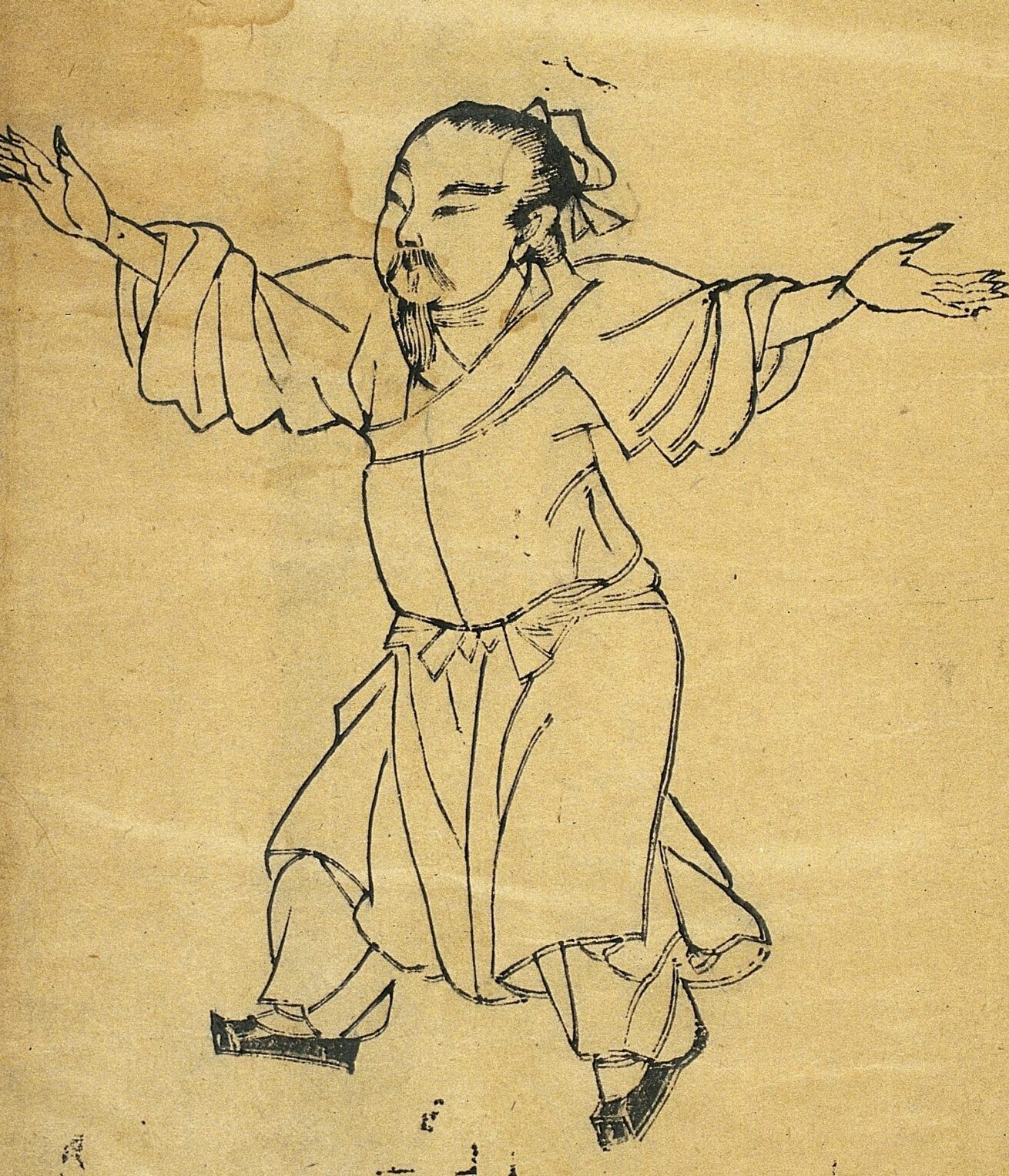
Here is a Daoist Buguazhang practitioner showing his form:
Tue
- 930-4pm
1-2-1
In-Person Hove BN3
tree of life
Wed
- 930-4pm
1-2-1
In-Person Brighton BN2
Anahata
Thur
- 930-6pm
1-2-1
In-Person Hove BN3 tree of life - 6pm-7pm
Qigong
Small Group Class
BN3
tree of life
Sat
- 9am-10am TaiJi in park Stonham Park BN3 (start May )
Sun
- Sunday Qigong Workshops
22 March
Tree of Life Hove
Training
All training options are beginner-friendly, and there is always the opportunity to go deeper for those who wish to develop their practice further.
Group classes are a great place to practise with others in a friendly and supportive environment. I run classes at Cornerstone Community Centre Hove on Monday evenings and at 7temples Wellness @ 8 Third Avenue, Hove.
I also offer one-to-one training sessions
throughout the week
for those who would like more personalised guidance in their practice.
Join us in our regular classes
Class Fees
- Drop-in: £12
- Membership £30 per month attend all classes and access online content
Standing order or BACS
Daniel Scott
20-55-13
90386413